Market Analysis
PDYN is entering a structurally favorable phase supported by
expanding demand for AI-enabled autonomous systems,
next-generation unmanned platforms, and U.S. defense-grade
robotics software. As defense agencies and commercial
operators accelerate adoption of autonomous flight, swarm
coordination, and real-time decision intelligence,
high-reliability AI mission software has become strategic
infrastructure and PDYN is positioned directly at the center
of this trend. From a fundamental perspective, the company
is experiencing improving revenue visibility through
expanding defense-contract pipelines, growing AI-service
deployments, and the establishment of its dedicated
Palladyne Defense division. Management has outlined a
multi-year growth trajectory, projecting revenue to triple
by 2026, supported by over $10M in contracted backlog and
meaningful EBITDA contribution as deployments scale. Market
appetite for U.S.-based defense-AI platforms remains
exceptionally strong, and capital rotation continues to
favor companies with verifiable operational output rather
than conceptual exposure. Technically, PDYN has demonstrated
resilient accumulation behavior, with persistent dip-buying
interest across key support zones. Despite elevated
volatility typical of small-cap defense-AI names, the
medium-term structure remains constructive as long as the
stock maintains support above recent consolidation levels. A
confirmed breakout from current compression zones could
re-rate the equity toward higher valuation bands as
AI-defense demand accelerates. Key takeaway: PDYN stands out
as a high-conviction name within the AI-autonomy and
defense-robotics ecosystem supported by strengthening
fundamentals, powerful sector catalysts, elevated government
spending trends, and a favorable trend setup. Pullbacks
offer disciplined entry opportunities, while the broader
defense-AI cycle continues to serve as the primary upside
driver.
Focus Areas
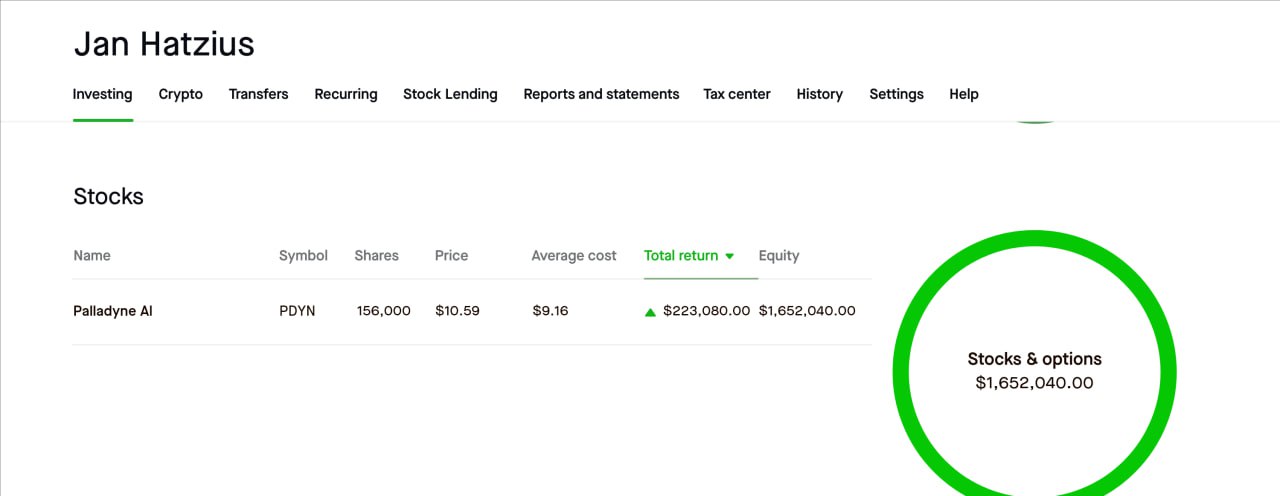
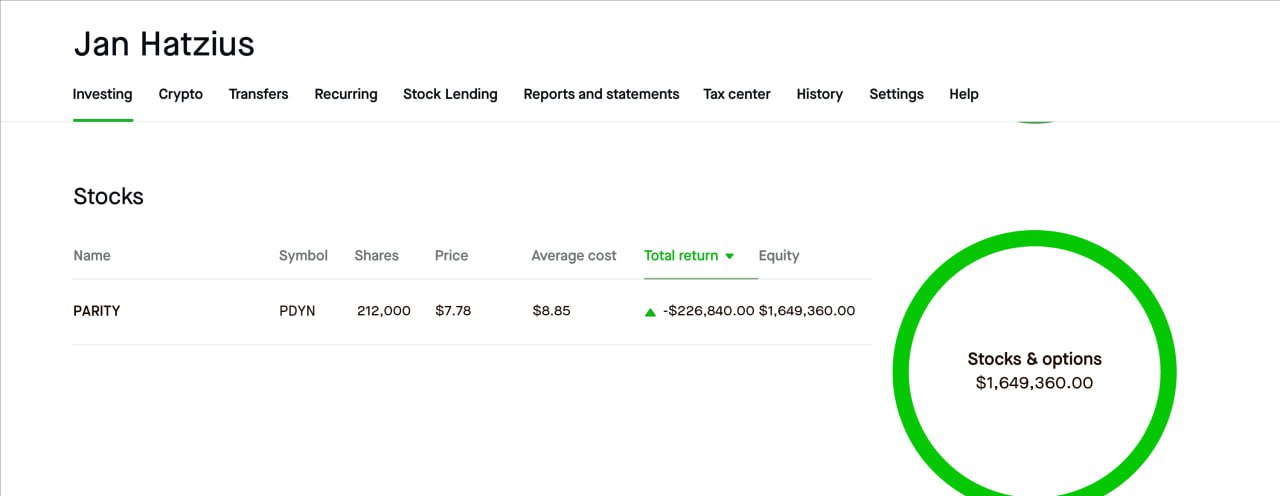
- 🔔 Purchase Details 🔔
- 📅 Transaction Date: December 4
- ✅ Ticker: PDYN
- 🏢 Company: Palladyne AI Corp.
- 📈 Portfolio Allocation: 15%
Risk Warning
Market sentiment has improved slightly, yet underlying
fragilities remain. Short-term rebounds are increasingly
misaligned with tightening liquidity, persistent core
inflation, and weakening market breadth. Federal Reserve
& Liquidity: Expectations for early-2026 rate cuts face
resistance as inflation remains sticky. Any upside surprise
in CPI/PCE could trigger rapid valuation compression,
especially in high-multiple growth sectors. Earnings &
Structure: Index strength continues to rely on mega-caps,
while small- and mid-caps face funding pressure and higher
refinancing costs. Defensive sectors are absorbing
institutional flows, raising the risk of sharp rotations.
Yields & Valuation: The 10-year yield near 4.3%–4.4%
limits valuation expansion and heightens re-pricing risk for
long-duration equities. Markets remain sensitive to macro
surprises. Macro & Geopolitics: U.S.–China tensions,
Middle East risk, and fiscal uncertainty increase the
probability of year-end volatility as liquidity continues
tightening. Key Takeaway: Maintain disciplined risk
management. Current resilience is positioning-driven, not
conviction-driven. Prioritize capital preservation, avoid
excessive leverage, and reduce concentrated exposure as
markets enter a more volatile, data-dependent environment.